
How to Search Civil Dockets
Start at Kansas CaseSearch, accept the agreement, and pick District. An exact case number gives the cleanest search. The other choices are Party Name, Business Name, Party As Business Name, and Citation Number. Choose Pawnee County, open the filters, and select Civil. Date boxes labeled File Date From and File Date To can narrow things down. Business Name and Party As Business Name are two distinct fields. They are not copies of each other.
Modern Odyssey-style numbers weave together a county abbreviation, the year, a case type, and a six-digit sequence. The sample PN-2024-CV-000042 shows the pattern only; it is not a real case. A empty result can stem from a typo. It can also stem from a wrong date range, or the wrong county or case type. The case might also be municipal, federal, on appeal, sealed, or simply outside the internet view. CaseSearch itself warns that its information is not the official record.
- Accept the CaseSearch public-access terms.
- Select District and the most exact search type.
- Enter the case number or party term.
- Choose Pawnee County and the Civil filter.
- Verify the event or request the document from the District Court clerk.
Pawnee Civil Docket Snapshot
According to the 2024 Kansas Civil Filings report, Pawnee County saw 290 civil filings in the period ending June 30, 2024. The breakdown: 53 regular actions, 167 limited actions, and 70 domestic-relations actions. These are counts by filing category. They name no parties and reveal no winners.
The single largest cell in the report is Limited Actions / Other, at 167 filings. Keep that label exactly as written. The source gives no basis for relabeling the whole group as debt, eviction, or collections. A statistical bucket explains docket volume in Pawnee County. It cannot describe any one civil case.
What a Civil Docket Shows
A civil docket follows procedure, not proof. The petition or complaint opens a claim, yet it proves nothing by itself. A summons and a return of service record how notice went out. An answer is a response to a complaint, never a judgment. Motions request action from the court. Responses push back. The written order is what actually rules. Discovery can happen without each item being filed or made public.
| Case Number | The unique county, year, case-type, and sequence identifier. |
|---|---|
| Case Style | The caption identifying parties; it does not state the outcome. |
| Filing Event | A petition, answer, motion, response, notice, or other submitted item. |
| Setting | A conference, motion hearing, trial, or other scheduled event that may reset. |
| Order or Judgment | The court's written action, subject to later modification or appeal. |
A dismissal ends a claim or the whole case. Whether it was with or without prejudice, and why, lives in the order itself. A judgment carries far more weight than a party's allegation. When the portal shows an event but not the document, get the public copy at the courthouse terminal or from the clerk.
Pawnee Civil Court Authority
Pawnee County District Court is a court of record in the 24th Judicial District. K.S.A. 20-301 gives Kansas district courts general original jurisdiction unless another law assigns a matter elsewhere. That broad authority is why civil, family, probate, guardianship, juvenile, and small-claims labels can appear within the state system, though public access is not equal across them.
The official district-court statute is the source for that trial-court role.
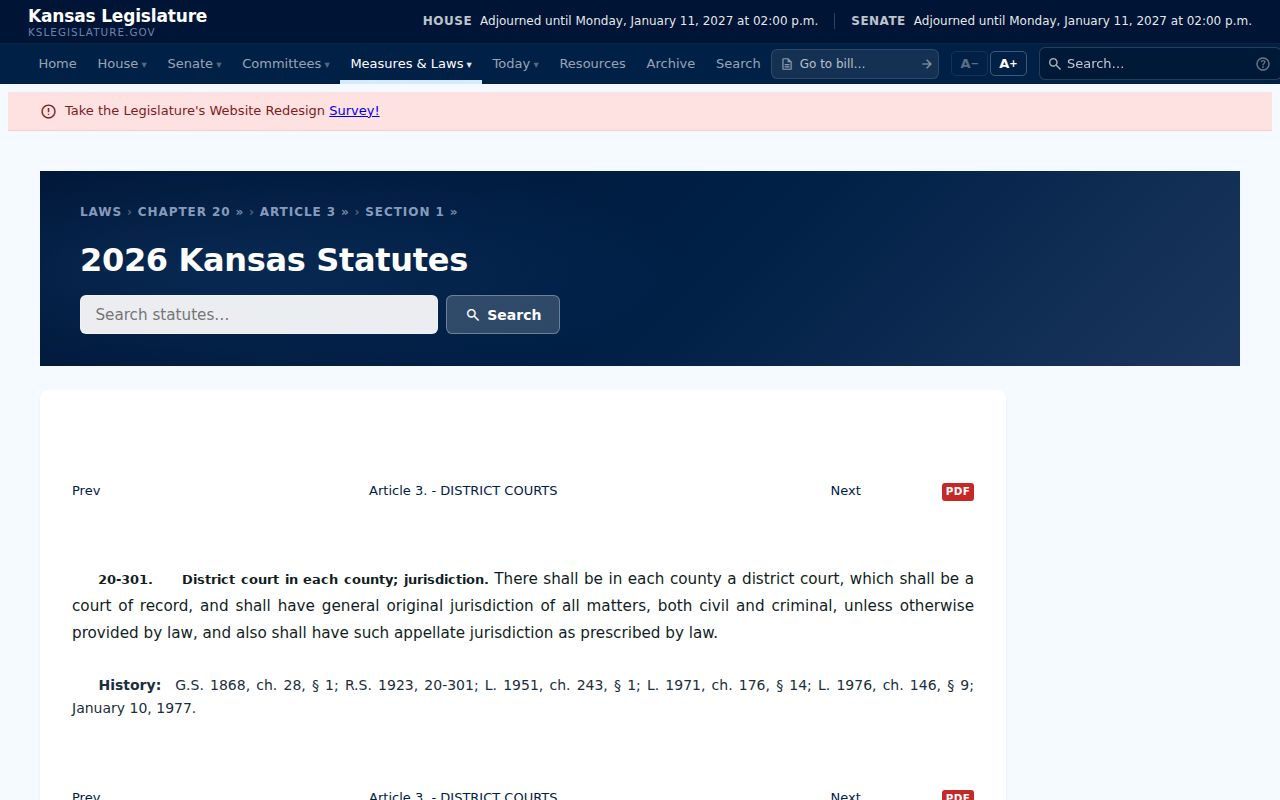
The state statute page shows which court hears a Pawnee County civil case in the first place. That matters here. A trial-level civil docket is not the same thing as an appellate or federal one.
Appeals go elsewhere. The Kansas appellate portal covers those. Federal civil cases live in PACER and the District of Kansas systems. Pawnee County sits in the federal Dodge City Division. So treat federal and appellate records as their own dockets. Never treat them as one merged local file.
Types of Civil Cases on the Docket
The state statistical table splits civil filings into regular, limited, and domestic-relations actions. Regular covers contract, other, real property, and tort. Limited actions stand as their own group. Domestic relations include marital status, other, Parentage Act, protection from abuse, and protection from stalking. These labels report filings for the Pawnee County civil docket. They do not promise every file is viewable online.
| 2024 Category | Pawnee Filings | Access Point |
|---|---|---|
| Regular actions | 53 | CaseSearch, terminal, or specific record request |
| Limited actions | 167 | CaseSearch, terminal, or clerk route as allowed |
| Domestic relations | 70 | Often restricted by case or document type |
Family and protection cases need extra care. Rule 22 makes child custody and support documents, parentage, adoption, CINC, protection-from-abuse, stalking, and similar sensitive categories inaccessible. A Family filter on the portal does not open every family case or paper.
Pawnee Civil Filing Status
Kansas Civil Filings is a separate feed of recent submissions. It can display county, case style, create date, case category, status, and documents. It shows these before the clerk accepts them. A status like Awaiting Approval is workflow language. It is not a ruling. It is not a confirmed docket entry or any sign the claims are true.
Kansas Rule 23 puts the filer in charge of designating case and document types. The filer also handles sealing plus personal-information rules. The clerk processes an e-filed submission, but processing is not a judicial decision. A rejected submission is not an accepted Pawnee County civil filing. For settled status, rely on CaseSearch and the court-maintained record.
Settings and Hearings on Civil Dockets
A setting on a Pawnee County civil docket is simply a scheduled court event. It might be a scheduling conference, a motion hearing, a mediation date, a pretrial conference, a trial, or a post-judgment proceeding. The entry itself never tells you how the judge ruled. Dates also move. A setting can be continued, vacated, or reset, and the newest notice or journal entry controls over an older calendar line.
Hearing coordination and written continuance procedures are covered in the 24th Judicial District local rules. Word of a moved date is not a substitute for the docket event or the order. When a setting looks unclear, check the Pawnee County court calendar channels. Then call the clerk.
- Motion
- A request for court action, not the ruling.
- Continuance
- A postponement or reset of a setting.
- Journal entry
- The written record of the court's action.
- Appeal
- A separate appellate proceeding; the district file remains the trial-level source.
Pawnee Civil Documents Behind Events
The online events index and the full civil file are two different things. A public Pawnee County court docket can name a complaint, answer, motion, notice, journal entry, or judgment. It never shows the paper itself. According to the Kansas district-court records page, courthouse terminals can supply public information and records. That reach goes beyond what appears online. Even a terminal cannot reach sealed or nonpublic material.
To ask for a specific public document, file the Kansas court-record KORA form. Name Pawnee County District Court on it. Give the case number, the document, and your preferred delivery format. The custodian may redact protected content and charge allowed reproduction costs. The clerk posts no Pawnee-specific copy-fee schedule, so confirm the cost before ordering. Also know that the clerk need not build a new compilation for you.
Pawnee Civil Privacy Boundaries
Public access to a civil docket has limits. A rule, a statute, or a court order can close part of the record. Do not repeat personal identifying information, minors' names, protected addresses, account numbers, or sensitive protection-case details found in a filing. A filed allegation proves nothing about liability. A public judgment can be altered, appealed, satisfied, or otherwise changed by later entries, so read the whole chronology before drawing conclusions. The official K.S.A. 60-2617 source sets out the governing text.
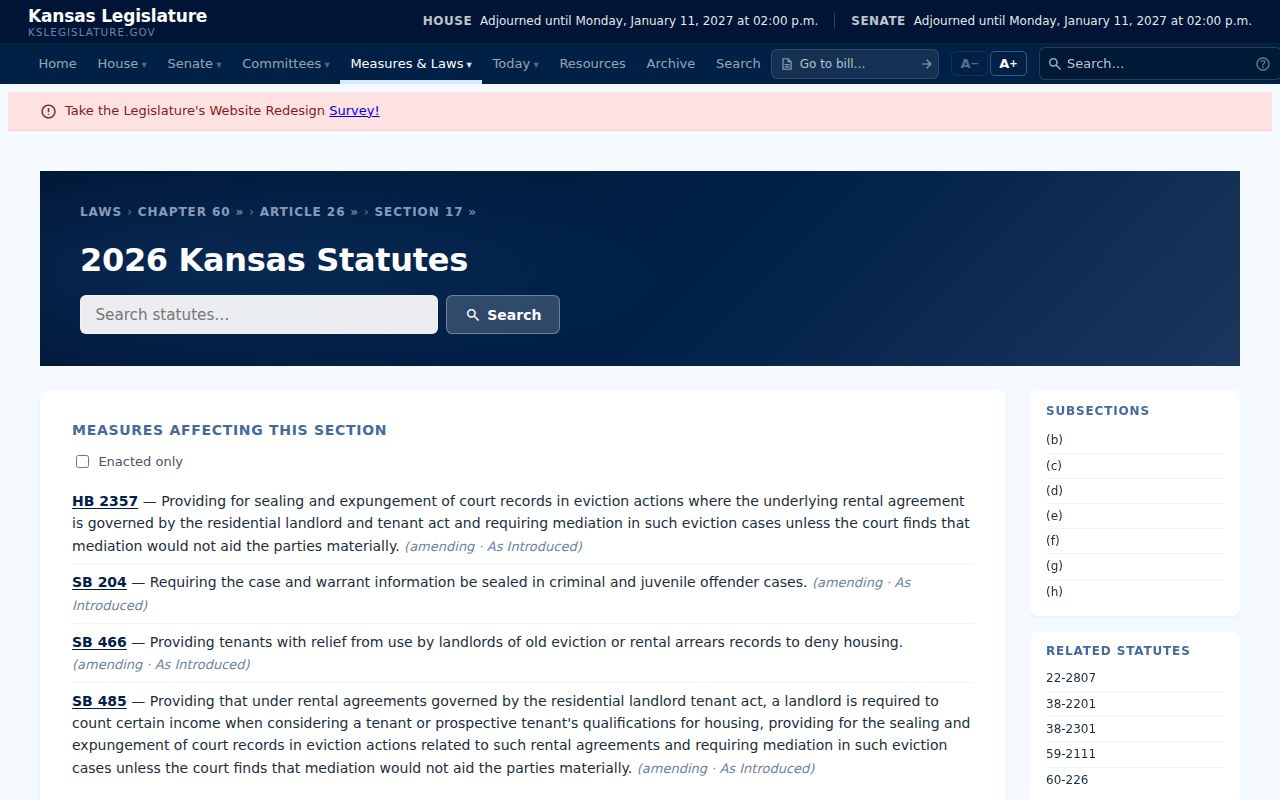
Under the statute, sealing, closure, and redaction depend on legal standards. A searcher's failure to find a record does not decide the question.
Access rule: Kansas Rule 22 separates internet, terminal, and nonpublic access. Rule 24 protects identifying information, while K.S.A. 60-2617 governs specified sealing and redaction decisions.
Public Access to Civil Dockets
You have three ways into a Pawnee County civil docket. CaseSearch puts eligible public case information on the internet. The terminal at the Pawnee courthouse can be the better tool. It sometimes displays public information or documents that never reach the web. For one specific public document, send a focused written request through the District Court custodian. A phone call to the clerk helps too. Staff can walk you through access steps, terminal logistics, and copy procedure. They cannot give legal advice. They cannot tell you what a ruling means. The Kansas Open Records Act sets the frame, but it does not erase judicial confidentiality. K.S.A. 45-220 governs the access procedures a requester must follow. K.S.A. 45-221 lists the exemptions. It tells the office to separate open material from closed material where that is reasonable. So a request, however well written, cannot open sealed, juvenile, family, or otherwise nonpublic records. The difference among the three channels matters most for an older Pawnee County civil docket. A converted case may carry a public events index online. But few web documents follow. The courthouse terminal often exposes more public material than the internet does. The written request route lets the custodian track down a named filing. That route also applies any redaction the law requires. No route obligates the court to assemble a custom list. Keep each request narrow enough to identify an existing record. When a Pawnee County civil docket search comes back blank, work through a short checklist. Confirm the search fields and the court you queried. Loosen a tight date range, or search the exact case number instead. Then ask the clerk. See whether the record sits at the terminal. The record may also be pulled by a specific document request. A missing online result does not mean the case is sealed. It may reflect a protected category, a preliminary submission, or an older conversion. It may simply reflect a search choice. Before you rely on anything, verify the docket and any document with the originating court.