
Traffic Court Records in Pawnee County
Pawnee County District Court keeps every state traffic case filed in the county. Larned Municipal Court handles city ordinance matters on its own. Larned is the county seat. That does not make a Larned citation a district case. Don't fold city tickets into district totals.
The Kansas Judicial Branch report covers the year ending June 30, 2025. It shows 1,649 Pawnee County district-court traffic filings: 1,424 infractions, 225 misdemeanors, and no felony traffic filings. The classification table counts 1,647 motor-vehicle violations and two parking violations. That zero in the ordinance column reflects the district-court table only. It does not mean Larned issued no ordinance citations.
Pawnee Traffic Filings by Type
The filing snapshot shows why charge type and classification are different animals. Infraction and misdemeanor fill the type-of-charge columns; motor vehicle, ordinance, other, and parking fill the classification columns.
Filing counts are just that: filings. They are not conviction totals, and they do not count people. The docket and the final order tell you how one case actually ended.
How to Look Up a Pawnee Traffic Ticket
Kansas CaseSearch lets you search by Citation Number. Pick District, type the citation, choose Pawnee County, and finish the human check. The public events then appear. Municipal matter? Call the issuing city instead.
- Read the citation and identify the court and citation number.
- For a state case, select District and Citation Number in CaseSearch.
- Select Pawnee County and apply an appropriate case-type filter if useful.
- Check the court, case number, event history, and setting.
- If no result appears, call Pawnee District Court at 620-285-6937 or use the public terminal at 715 Broadway, Larned.
- For a Larned citation, call the Municipal Court Clerk at 620-285-8500.
A payment lookup can find what you owe. It cannot replace the court docket or prove a legal disposition.
Citation Search and Payment Search
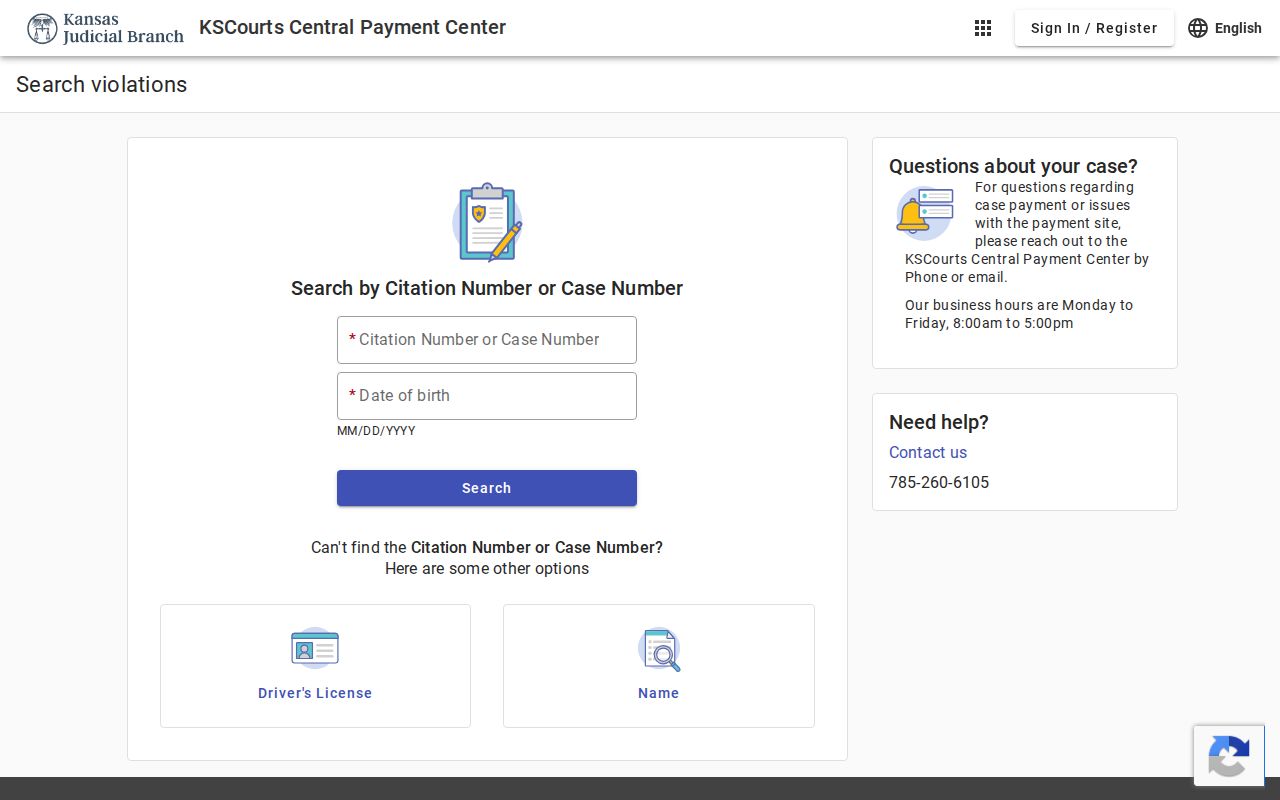
The state portal and the Central Payment Center answer different questions. CaseSearch carries public case information and events; the payment system exists to find and pay eligible obligations.
| Tool | Useful Fields | What It Does Not Prove |
|---|---|---|
| CaseSearch | Citation number, party, county, case type | The portal printout is not the official record |
| Central Payment Center | Citation or case number with DOB; name with DOB; business name | Payment completion does not establish the full disposition |
| Court clerk | Citation, case number, party name | Staff cannot give legal advice |
The official Central Payment Center search image appears below.
Keep private identifiers inside the official payment transaction itself. Never reproduce them in a public record summary.
Finding Your Traffic Court Date
Your Pawnee County traffic date may appear on the citation and in the public case events. Compare the two. Then confirm close to the appearance, since a court can continue, vacate, or reset a setting.
| Citation Number | The identifier printed on the ticket; a district case may later have a format such as PN-2025-TR-000123, shown only as an illustration. |
|---|---|
| Court | Pawnee County District Court or the issuing municipal court. |
| Date and Time | The current appearance or hearing setting. |
| Setting Type | Arraignment, trial, or another listed event. |
| Status | Pending, reset, disposed, or another public label that must be read with the order. |
The Pawnee County court calendar explains reminders, written continuances, and missed-setting checks.
Larned Traffic Court Schedule
Larned Municipal Court convenes on the first and third Thursday of each month. Arraignments start at 4 p.m., while trials and all other matters run at 2 p.m. This recurring schedule does not prove your citation's date.
Nora Schaller is the Municipal Court Clerk. She sits at 417 Broadway, Larned. She can be reached at 620-285-8500. The city says fines may be paid at the City Clerk's Office, and it links to online payment. That link leads to a utility-billing screen, though. Confirm the current court-payment route with the clerk.
The city's Larned online service page shows what the payment vendor publishes.
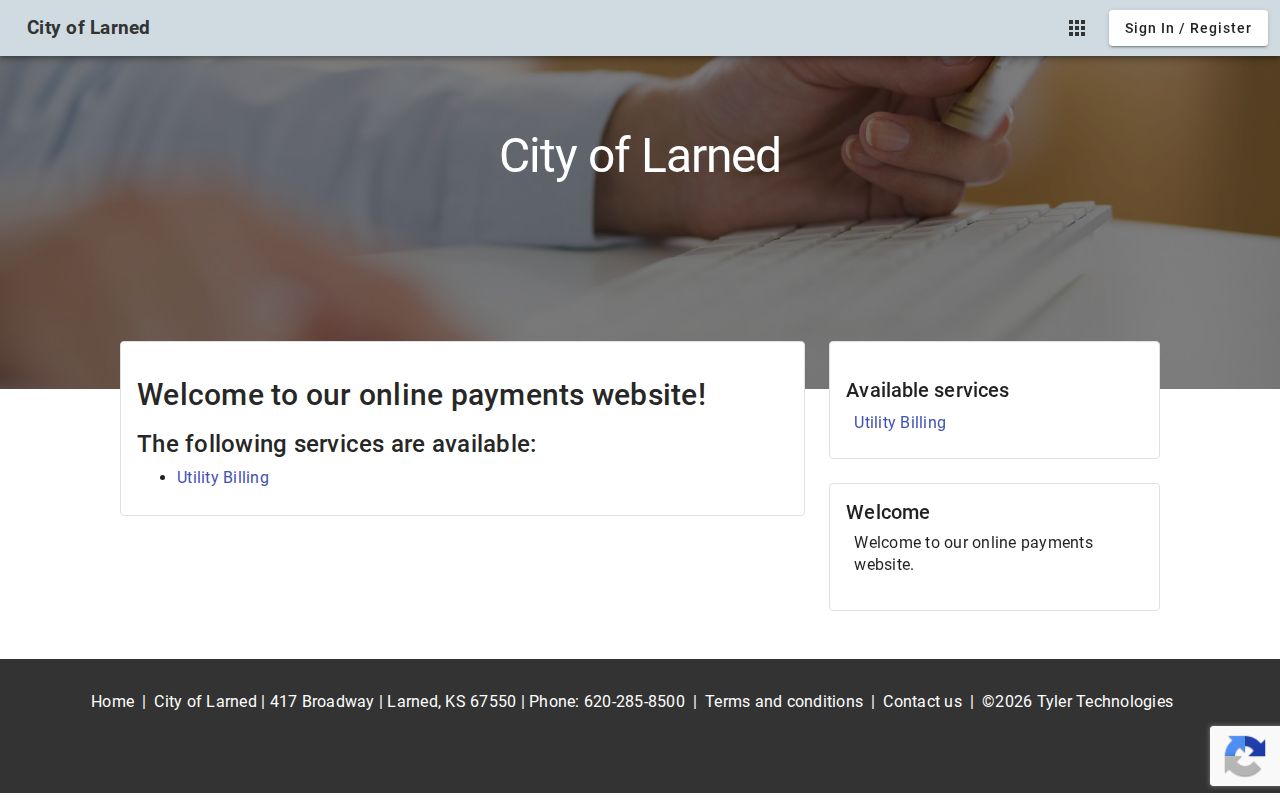
That mismatch is a good reason to verify the method before sending money or typing in citation data.
Paying or Contesting a Pawnee Ticket
Paying and contesting are different case paths. Read the citation and current court instructions before choosing either, because a payment portal may not show later hearings, documents, or appeal activity.
| Paying | Contesting |
|---|---|
| Use the issuing court's approved method. | Follow that court's plea and setting procedure. |
| Confirm the case and amount before submission. | Meet the response or appearance deadline. |
| Keep the receipt and check the court record. | Keep the filed response and hearing notice. |
| Payment status is not the full docket. | A request is not a granted continuance. |
Missed deadline or setting: Contact the issuing court promptly. Do not assume payment, a new date, or dismissal without current court confirmation.
Clerk staff may explain procedure and access. They cannot advise which plea or response is best.
Pawnee Central Payment Options
The Kansas Courts Central Payment Center takes Visa, Mastercard, Discover, debit, and eCheck for eligible obligations. Card and debit payments carry a five-percent convenience fee. That fee has a one-dollar minimum. eCheck costs a one-dollar fee.
Mail payments to Kansas Courts Central Payment Center, PO Box 750200, Topeka, KS 66675-0200. Include the party name, case number, and county. The payment center answers at 785-260-6105, Monday through Friday, 8 a.m. to 5 p.m. Confirm eligibility and the exact amount before paying.
Court Traffic Record vs Driver Record
Two offices keep two different files. The Pawnee court record documents the citation case, while a separate state licensing-agency record covers driving privileges. This distinction just points each request to the right place.
| Court Traffic Record | Driver Record | |
|---|---|---|
| Custodian | Issuing court and its clerk | Kansas state licensing agency |
| Shows | Citation, filings, settings, plea, orders, and disposition where public | Licensing actions and reportable driving history |
| Access | CaseSearch, court terminal, or clerk request | Licensing agency's authorized request route |
A blank court web result says nothing about another agency's file. For a citation's hearing or outcome, ask the issuing court.
Pawnee Traffic Fees and Copies
Traffic payments, convenience fees, and copy costs are three separate charges. The payment center publishes its transaction fees, but Pawnee County posts no local court-copy schedule. Ask the clerk for a current estimate instead of guessing.
| Item | Published Amount or Route |
|---|---|
| Card or debit convenience fee | 5%, with $1 minimum |
| eCheck convenience fee | $1 |
| Public terminal viewing | Generally free for ordinary viewing |
| Plain or certified traffic record copy | Request current cost from the issuing court |
A receipt proves a transaction happened. Only a certified court copy, issued by the clerk, confirms the public record you requested.
Older Pawnee Citation Fallbacks
Old citations and converted cases may show no documents on the web. Recheck your punctuation and county. Then try the courthouse terminal. A public terminal can surface converted public information that the online docket lacks. It still cannot override sealing or confidentiality.
Rule 24 protects full birth dates, driver-license numbers, financial details, and other identifiers. Never copy those fields off a citation or payment screen. For a specific public document, file the judicial records form. Name the issuing court, case number, and document.
Pawnee Traffic Access Boundaries
Some traffic citations in Pawnee County sit behind access rules rather than in open view. Kansas Rule 22 keeps certain citations and other records out of ordinary public reach. Rule 24 adds a layer of protection for personal identifying details. So when a case does not show up online, the cause could be plain timing. It could be a record still in conversion, a search aimed at the wrong court, or one of these access rules quietly blocking the view.
There are sound uses for this data. A person can track their own traffic case. They can confirm a public hearing date, understand a filed outcome, or follow court activity of public interest. Whatever the docket shows, confirm the current setting and the amount owed. Confirm the disposition with the issuing court or the official payment center.