
How to Search Criminal Dockets
Start at Kansas CaseSearch. Accept the agreement, pick District, and choose a search type. Case Number works best. Party Name, Business Name, Party As Business Name, and Citation Number are options too. Select Pawnee County and set Case Type to Criminal. A file-date range can narrow the results. The portal labels its data as public case information, not the official court record.
Precision prevents false matches. Odyssey-style case numbers combine a county code, year, case type, and a six-digit sequence. The format looks like PN-2024-CR-000042, an illustration rather than a real case. The web view may lack an event or document. Then try the courthouse public terminal. You can also ask the District Court clerk about the specific record. A written request also works for a named public filing.
- Open CaseSearch and accept the access terms.
- Select District, then the best search type.
- Choose Pawnee County and apply the Criminal filter.
- Complete the human check and open the matching case.
- Verify a key event with the District Court clerk.
Pawnee Criminal Docket Numbers
The Kansas 2024 Criminal Filings report counts 209 Pawnee County criminal filings. The period ended June 30, 2024. That figure splits into 94 felony and 115 misdemeanor filings. The district-court table shows no appeals. Pending work included 53 felony cases and nine misdemeanor cases. These numbers measure court workload, not named people or outcomes.
The prior report counted 151 total filings. That shift reflects filing volume, not a crime trend. Felony and misdemeanor mark offense levels and report columns, never findings of guilt.
For jurisdiction questions, the official Kansas criminal-jurisdiction source can help you pick the correct Pawnee County criminal docket.
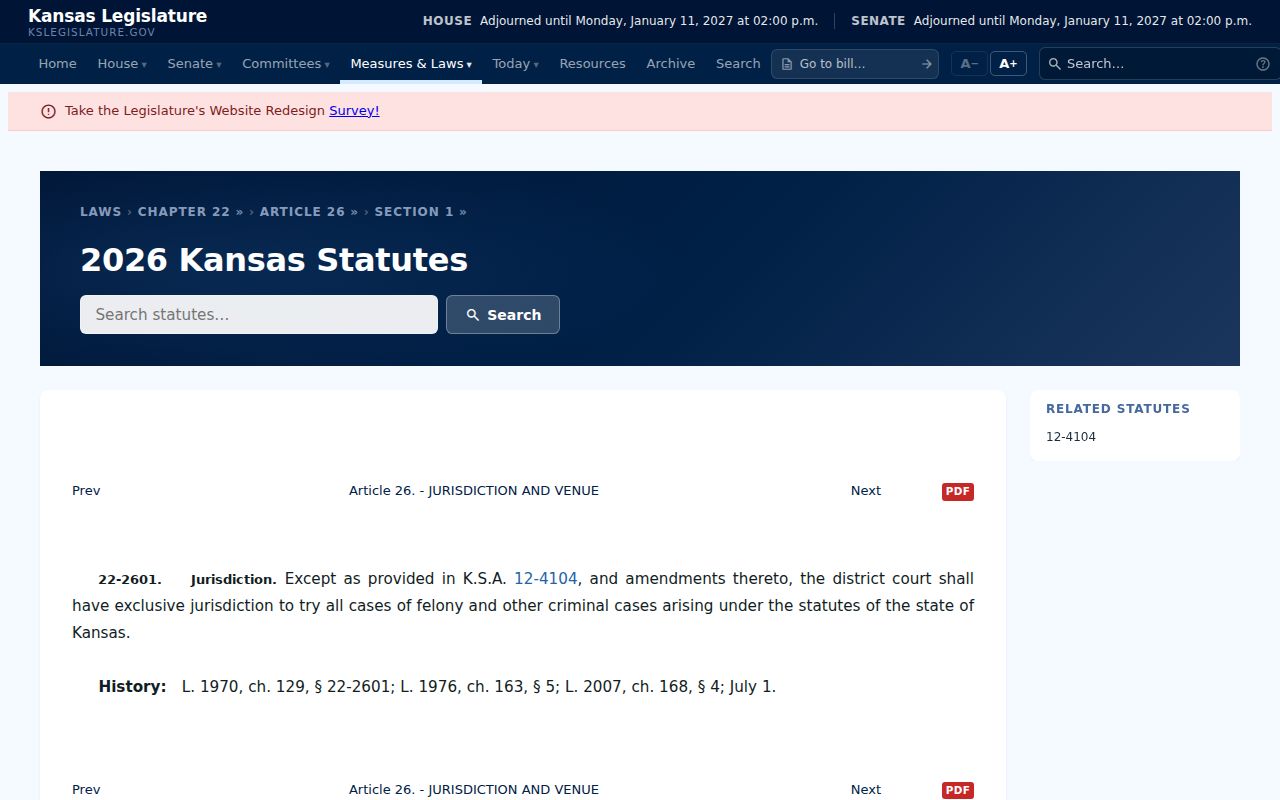
The statute page explains why the court level must be settled before any Pawnee County docket search begins.
What a Criminal Docket Shows
Think of a Pawnee County criminal docket as a dated index of events. It can show the charge filed, counsel appearances, settings, motions, bond events, pleas, orders, disposition, sentencing, and later activity. Every label does one narrow job. A complaint states an accusation. A hearing entry confirms activity occurred. A motion asks the judge to act. None of these alone proves guilt. For the recorded outcome, turn to the disposition or judgment and its related order.
| Case Number | County, year, criminal type, and sequence, such as PN-2024-CR-000042. |
|---|---|
| Charge | The alleged offense and cited statute; it is not a conviction. |
| Setting | An arraignment, pretrial, motion, plea, or trial date that may change. |
| Order | A written judicial action that controls over a vague event label. |
| Disposition | Dismissal, plea, diversion, verdict, sentence, or another resolution. |
Names can match. Match the case number and dated events to a person before drawing conclusions. A payment result may state an amount due, but it cannot replace the criminal events index.
Pawnee Criminal Docket Terms
Kansas criminal entries repeat a handful of short terms. What each means depends on its dated entry and any linked order. The 24th Judicial District local rules also govern motion hearings, notice, and continuances.
- Arraignment
- A proceeding at which the charge is addressed and a plea or later setting may be handled.
- Continuance
- A postponement or reset, not a dismissal.
- Diversion
- A disposition category that must not be described as a trial conviction.
- Journal entry
- The court's written ruling or recorded action.
- Pending
- An unresolved status, not a finding against a party.
Read docket entries in order. A motion may be granted, denied, withdrawn, or left pending. Warrant details can stay restricted. That can happen while the warrant is sought or before execution. So a public case can still have an incomplete public list.
Stages on a Criminal Docket
Not every state case hits every stage. Yet the Pawnee County criminal docket tends to follow a sequence. The complaint or information opens the matter. A summons, warrant-return event, or first appearance may come next. Arraignment addresses the charge and the plea. Motions, counsel appearances, bond conditions, and continuances can fill the record. The dated entries then lead toward resolution.
Docket flow: Filing › Arraignment › Pretrial › Plea or Trial › Disposition › Sentencing
A reset moves the schedule. It does not end the case. A plea is distinct from sentencing, and later probation or post-judgment events may follow in public view. For the next setting, check Pawnee County court calendar resources; for the formal result, rely on the written judgment.
Pawnee Payment Search Limits
The Kansas Central Payment Center does one narrow job. It can find a payable balance or a citation number. It cannot tell you the charge, the plea, or how a case was resolved. For public district-court events in Pawnee County, use CaseSearch; the clerk keeps the official record.
The official Central Payment Center source shows what the payment portal itself displays.
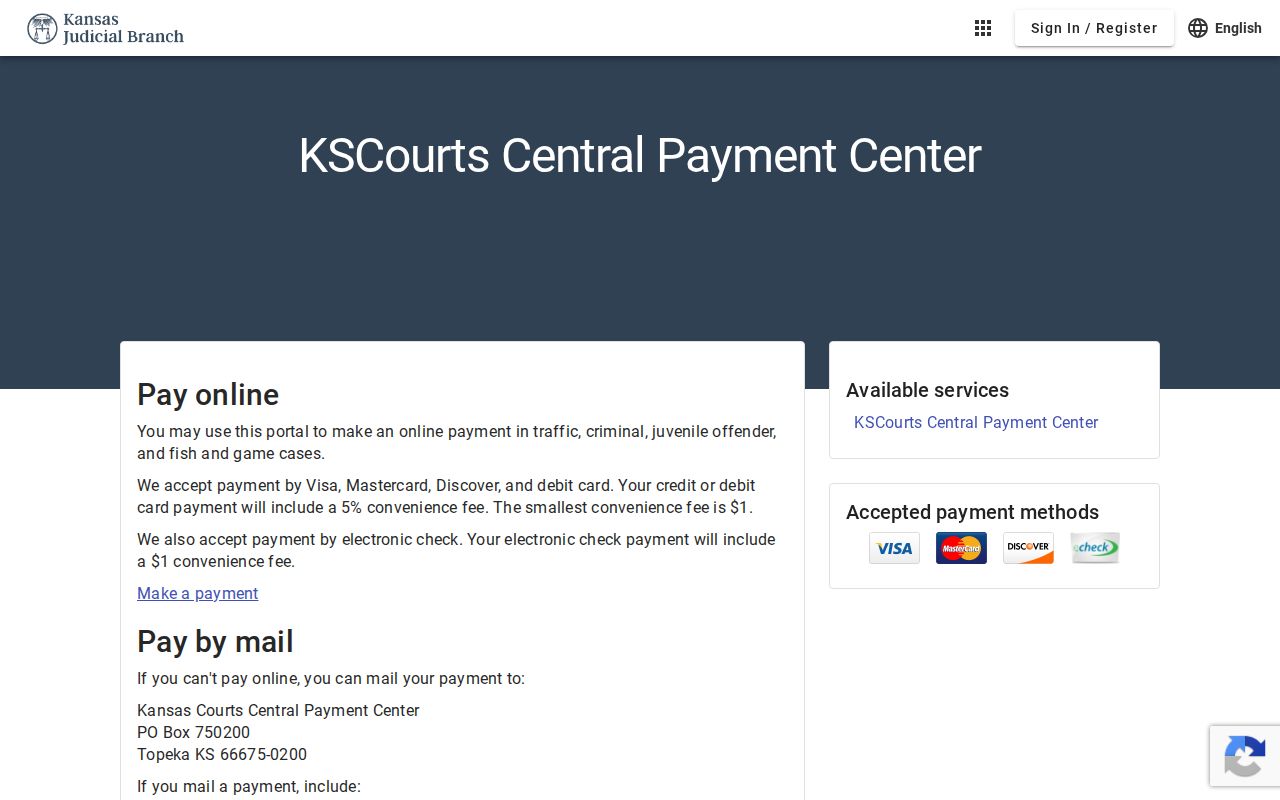
That separation is the visual cue worth remembering. Payment status and criminal case status are two different records.
Which Court Holds Criminal Dockets
Two courts split the criminal work in Pawnee County. State felonies and district-court misdemeanors sit with Pawnee County District Court, part of the 24th Judicial District, and the District Court clerk keeps those dockets. City ordinance matters are different. They belong to the city court that issued them.
Larned Municipal Court takes ordinance traffic tickets, fire-code and property violations, and other city misdemeanors. Its reach stops at ordinance violations under K.S.A. 12-4104. Anything more serious travels to district court.
The official Larned Municipal Court page lays out this local route.
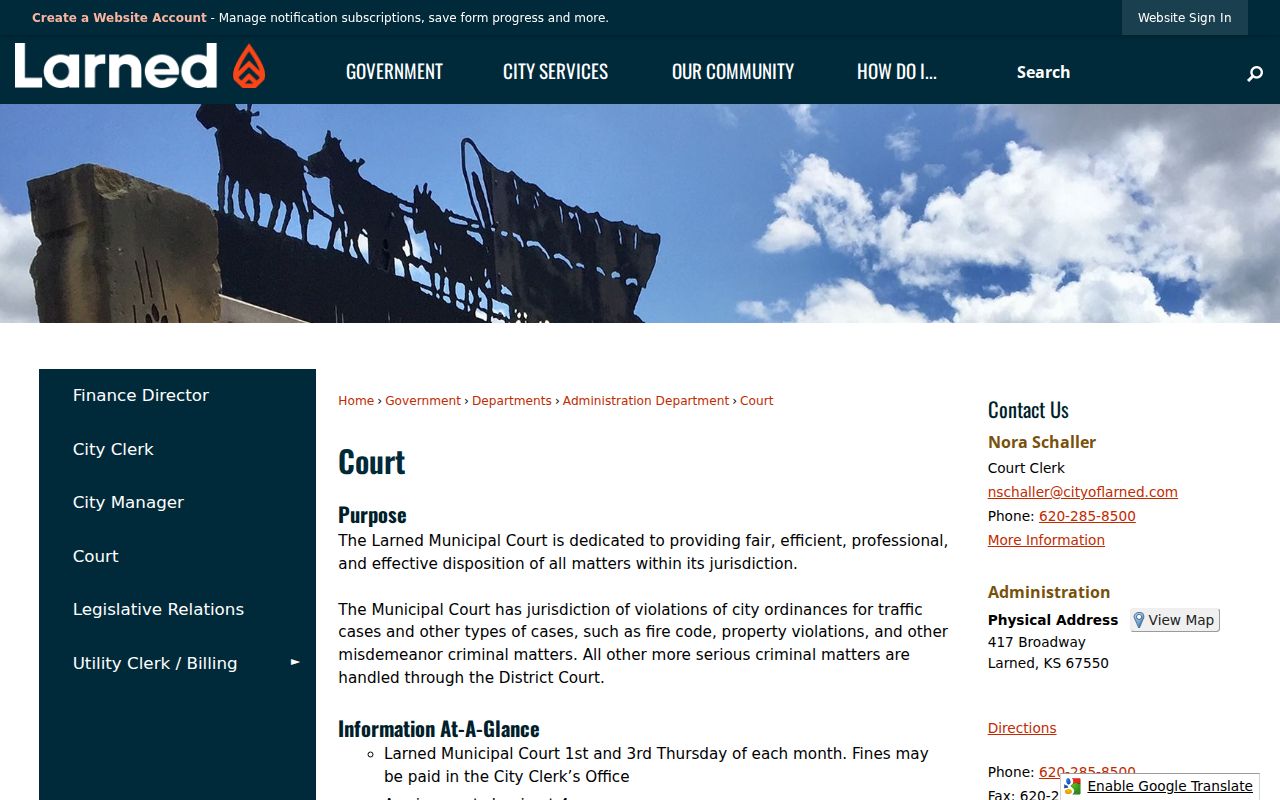
That city page helps you in one way. It lets you tell a municipal ordinance docket from a Pawnee County state criminal docket. An appealed state case can surface in the Kansas appellate portal. Federal prosecutions run through PACER and District of Kansas records, not CaseSearch. Pawnee County sits in the federal Dodge City Division. Picking the wrong system is the most common reason a search comes back blank.
Pawnee Criminal DUI Snapshot
DUI filings in Pawnee County split across systems. The 2024 Kansas DUI Caseload report lists 26 criminal DUI filings and 14 traffic DUI filings, 40 in total. Its disposition columns count six diversion or deferred-adjudication outcomes, 11 dismissals, and 21 guilty pleas. Two cases fall under other outcomes. Jury and court trials: none. Every figure is a countywide aggregate for the period, not a fact about any named case. A single DUI can sit in a state criminal, state traffic, or municipal ordinance system, so identify the court before reading anything into the numbers. Then read that case's events and order.
Pawnee Criminal Docket Fallbacks
The online portal is not the only door. Every Kansas district court keeps a public terminal under Rule 22. At the Pawnee County courthouse, that terminal may display public information or documents the web portal never exposes. That can include some older converted material. It still respects confidentiality. An expungement, sealing order, juvenile restriction, or similar rule blocks the terminal too. Call the District Court clerk before you drive over. The county page posts no full terminal schedule, so confirm the procedure first.
A phone call can settle routing and copy questions fast. Staff cannot interpret an event for you or hand out legal advice. For a particular complaint, order, or judgment, file a written Kansas Open Records Act court-record request. Name the case and the document. Include your delivery choice and any certification need. Copy costs may apply. No Pawnee-specific fee schedule is published, so ask for an estimate instead of guessing at a price.
Each channel solves a different problem. CaseSearch locates eligible public events, while the terminal broadens access to public court material. A focused request targets one document. None of them authorizes a bulk compiled history. If the case is municipal, call that city clerk. Federal cases go through PACER or a District of Kansas public terminal.
Public Access and Sealed Criminal Dockets
Kansas Rule 22 lets the public reach case records and events indexes through the portal and the courthouse terminal, subject to law and orders. Internet access is narrower. Expunged criminal cases, juvenile-offender matters, grand-jury material, and other protected categories stay off limits. A blank result can also reflect an older converted record. The wrong county can do it. So can the wrong court, a name variation, or search syntax. That is not proof no proceeding exists.
Key Rules:
Kansas Rule 22 defines public portal and terminal access and lists inaccessible categories.
Kansas Rule 24 requires protected identifying information to be excluded.
K.S.A. 60-2617 addresses sealing, closure, redaction, warrants, and subpoenas.
Use the courthouse terminal or call the clerk. You can also file a focused court-record request when public material is missing online. The clerk cannot give legal advice, create a bulk history, or reveal sealed material. Verify consequential readings with the originating court.